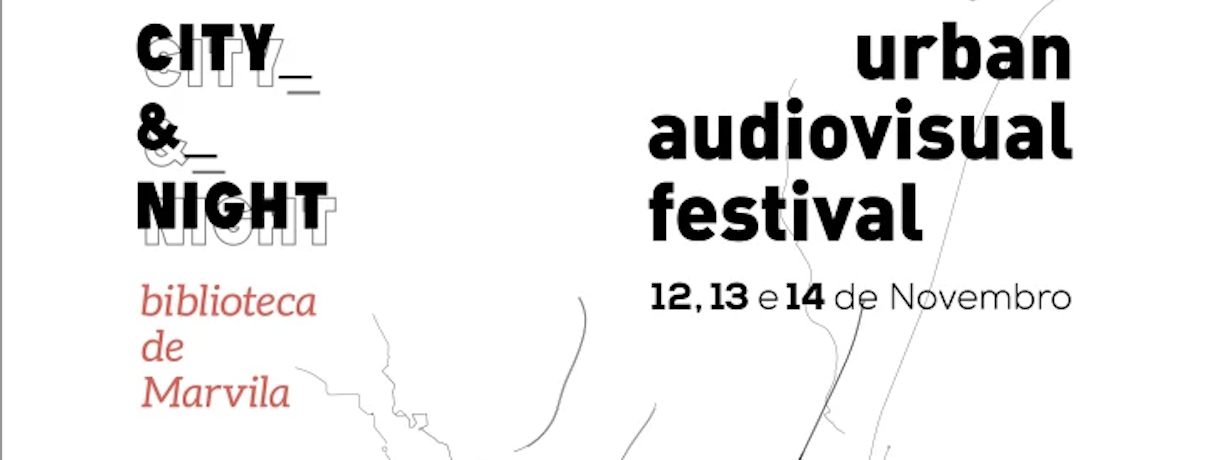
Each year, the Urban Audiovisual Festival (UAF) begins with an open, interdisciplinary round table that sets the tone for the entire event. This moment is not just symbolic—it’s a foundational space where critical perspectives intersect, where researchers, practitioners, artists, and activists come together to engage in collective reflection. The 2020 edition was no exception. With the annual theme “The City and the Night,” the opening debate delved into the multiple, often overlapping meanings of the urban night, exploring how it is lived, regulated, contested, and imagined.
This year’s round table brought together five compelling voices whose backgrounds span sociology, activism, gender studies, harm reduction, and urban lighting. Each speaker offered a unique angle on the night, helping us map out an increasingly complex nocturnal landscape:
Manuel Garcia-Ruiz (CIES-Iscte, ISUP, Associação Descalçada)
A sociologist and urban ethnographer, Garcia-Ruiz reflected on nighttime cultural policies, proximity tourism, and the role of festivals and informal practices in shaping urban nightscapes.
Paula Rainha (Women in Lighting – Portugal)
Bringing a feminist and design-centered perspective, Rainha introduced questions of safety, representation, and agency in how public lighting is conceived and experienced, particularly by women and gender-diverse communities.
🌐 Women in Lighting
🔹 Jordi Nofre (CICS.NOVA – LXNIGHTS)
A long-standing scholar of urban night geographies, Nofre discussed shifting urban policies and the tensions between cultural vitality, gentrification, and noise regulation in European nightlife districts.
🌐 LXNIGHTS
🔹 Luma Nogueira de Andrade (UNILAB – CIES-Iscte)
As the first trans woman professor in Brazil’s federal university system, Nogueira de Andrade offered a powerful reflection on nighttime as a space of both vulnerability and resistance for LGBTQI+ communities in Latin America.
🔹 Cristiana Pires (Kosmicare – Universidade do Porto)
A specialist in harm reduction, Pires emphasized the need for inclusive night policies that center care, mental health, and safer partying practices, drawing on Kosmicare’s frontline work with partygoers.
🌐 Kosmicare
This vibrant opening session reminded us that the night is never neutral—it is a contested and creative space, full of promise and contradiction. From lighting design to social movements, from rave scenes to urban governance, the city at night demands a multiplicity of lenses.
 Manuel Garcia-Ruiz